
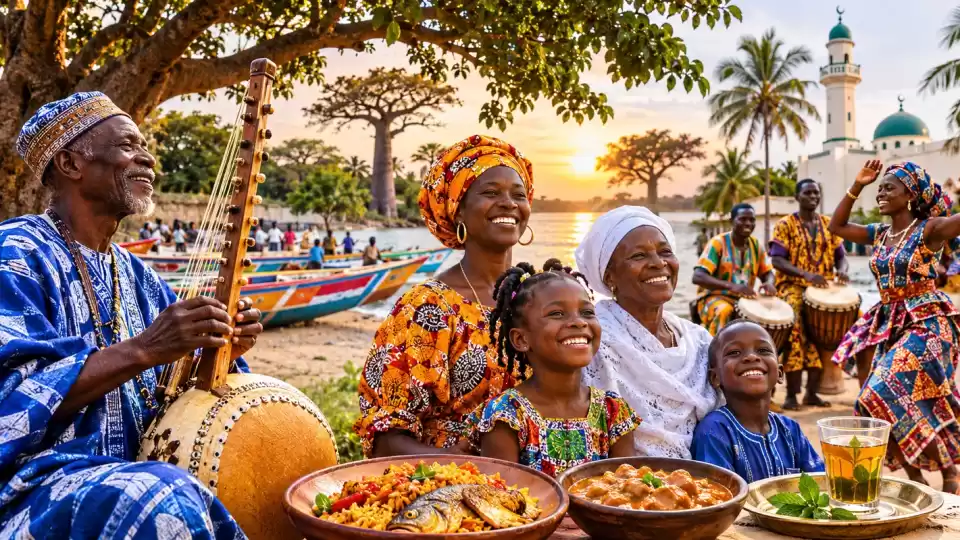
When you travel to The Gambia, you soon discover that the country has much more to offer than sunshine, beaches and beautiful landscapes. Family ties, hospitality, music, colourful clothing, local dishes and a strong sense of community are part of everyday life.
Yet there is no single Gambian culture. The country is home to different ethnic communities, each with its own languages, traditions, family customs and cultural practices. This diversity makes getting to know The Gambia particularly rewarding.
Would you like to understand more about the country and its people during your trip? Travelling with an open mind, showing interest and respecting local customs can help. This guide introduces some important aspects of traditional Gambian culture.
1. A country of diverse cultures and traditions
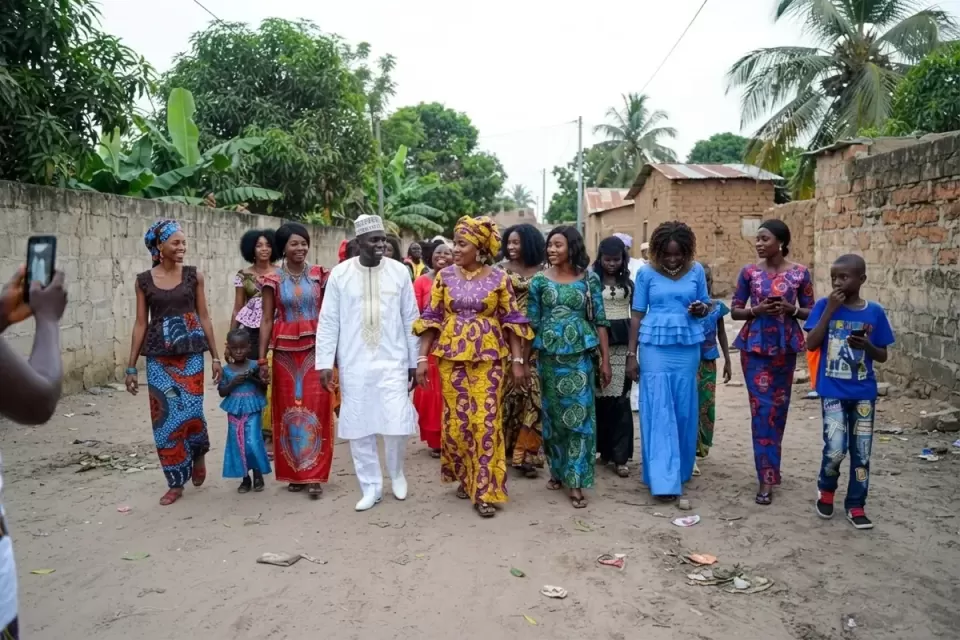
The Gambia is a culturally diverse country. Its communities include the Mandinka, Fula (Fulani), Jola, Wolof and Serahule. Each community has its own cultural history, language and traditions.
These differences can be seen in traditional clothing, music, weddings, naming ceremonies and family customs. Practices can also vary within communities, depending on families, surroundings and personal preferences.
- The griot tradition: Griots play an important role in passing on stories, history and oral traditions. Music and instruments such as the kora can be central to this tradition.
- Traditional ceremonies: Weddings and naming ceremonies bring relatives and communities together.
- Farming and village life: Agriculture, rice cultivation and livestock keeping play an important role in everyday life in various rural areas.
- Family traditions: Knowledge, stories and customs are often passed down through generations.
It is important not to treat any one community as representative of the whole country. Cultural diversity is a valuable part of The Gambia.
2. Family, respect and community life
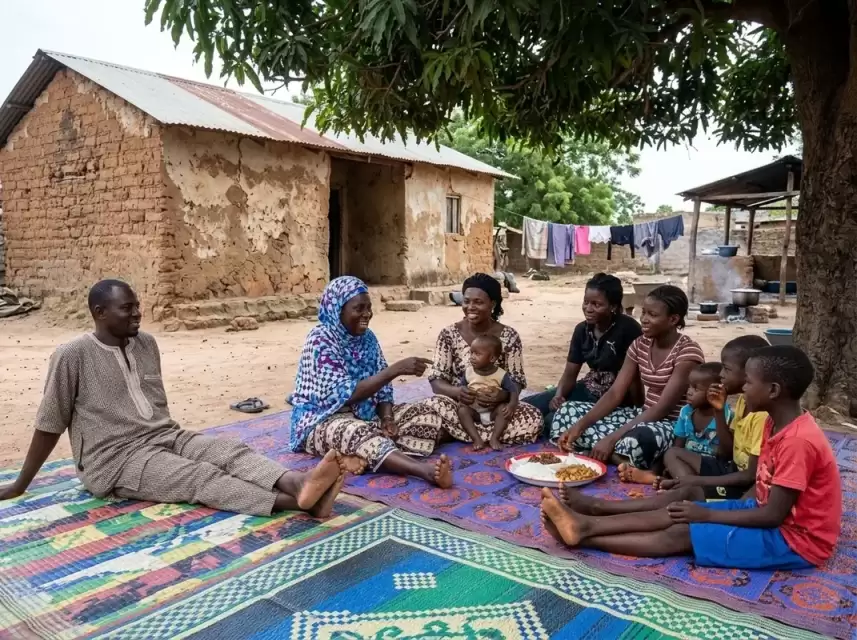
Family occupies an important place in Gambian life. It often means more than parents and children. Grandparents, aunts, uncles, cousins and other relatives may be closely involved in everyday life.
There is a strong emphasis on mutual support, respect for elders and helping one another. Relatives support each other when needed, whether with practical matters, important decisions or difficult moments.
The wider community also plays a role. Visiting relatives or neighbours, greeting one another, sharing meals and spending time together are important aspects of social life.
Respect for elders
Older relatives are often valued for their experience and advice. Their views may play an important role in family decisions. Visitors should therefore approach elders kindly and respectfully.
A simple greeting, listening patiently and showing interest are generally appreciated. You do not need to know every custom straight away. A friendly attitude and willingness to learn make a considerable difference.
3. Religion and everyday customs
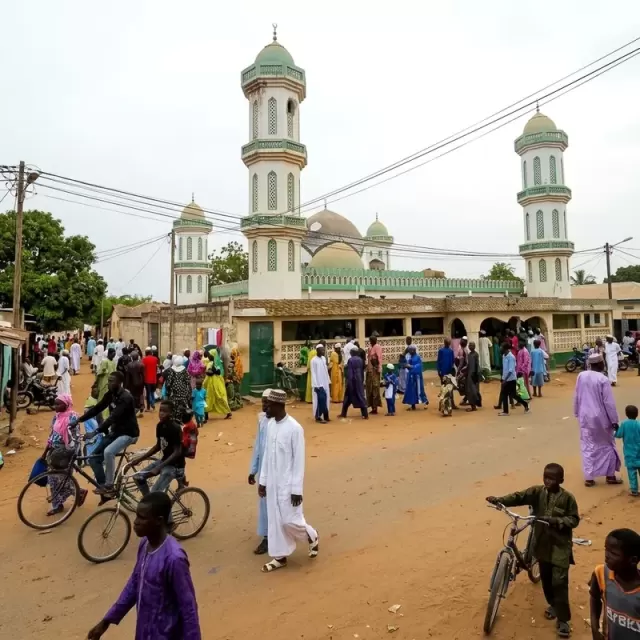
The Gambia is predominantly Muslim, and religion plays an important role in everyday life for many people. Personal practices and local traditions can nevertheless differ between families and communities.
As a visitor, you do not need to share the same beliefs, but it is important to respect religious customs.
- During Ramadan, many Muslims fast from dawn until sunset. Be considerate towards people who are fasting.
- Wear modest, covering clothing when visiting villages, mosques or religious places.
- Be mindful of prayer times and follow local guidance.
- Ask permission before taking photographs at religious gatherings or ceremonies.
Respect means not assuming that everything you find interesting as a visitor is intended to be observed or recorded.
4. Greetings and social etiquette
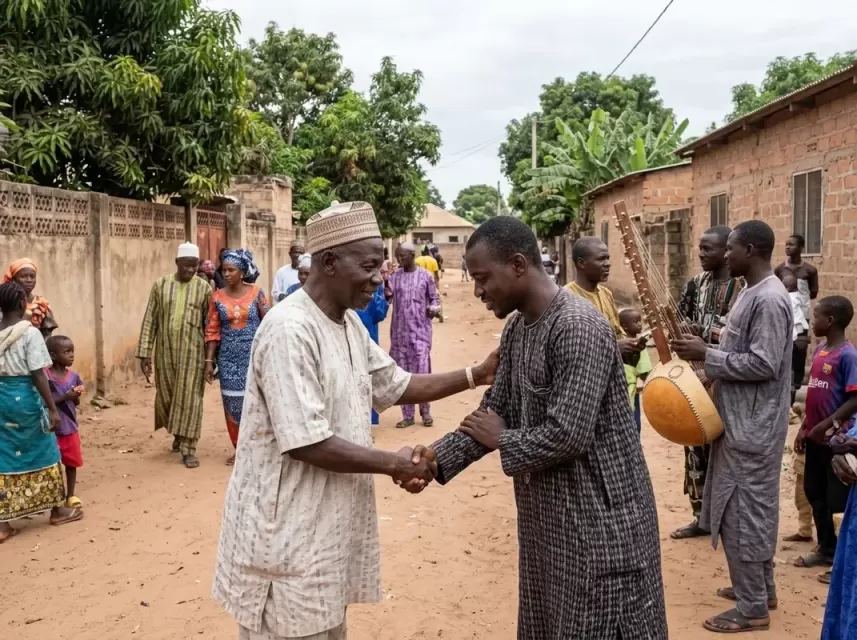
In The Gambia, a greeting is more than a quick way to begin a conversation. Taking time to greet someone and ask how they are is part of everyday social interaction.
Visitors may find it unfamiliar when conversations do not immediately get to the point. Take your time. A friendly greeting is often a pleasant first step towards making a connection.
A few practical etiquette tips
- Greet people before asking a question. Starting immediately with a request can come across as impolite.
- Preferably use your right hand. The left hand is often considered less appropriate when giving or receiving food, money or other objects.
- Respect elders. Address older people kindly and give them space.
- Dress modestly. This is particularly advisable in villages and religious places.
- Ask permission for photographs. Do not photograph people, ceremonies or private occasions without asking.
- Remain calm and patient. Speaking loudly, showing impatience or being confrontational can be poorly received.
- Be mindful of personal space and local customs. What is taken for granted in one country may not be elsewhere.
Customs vary by person and setting. Treat these suggestions as practical guidance rather than rules that apply to every Gambian.
5. Traditional Gambian clothing
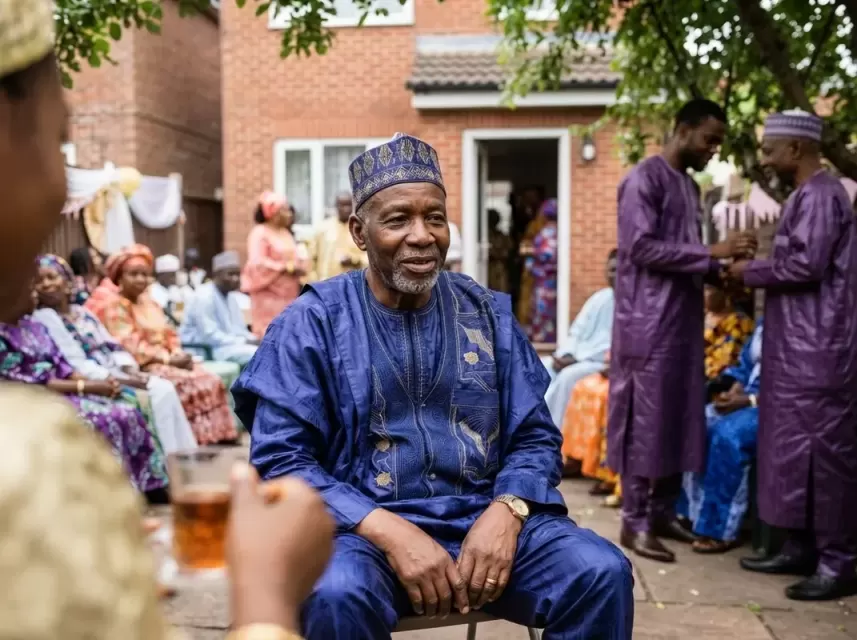
Traditional clothing is a colourful and recognisable part of Gambian culture. Fabrics, patterns and styles can reflect personal taste, cultural background and the occasion.
One well-known garment is the Grand Boubou, a loose-fitting, elegant robe worn by men. It can feature elaborate embroidery and is worn on occasions including weddings and religious festivals.
Traditional women’s clothing is often colourful and elegant too. On special occasions, dresses may be combined with matching headwraps. Tie-dye and batik fabrics also form part of this vibrant clothing culture.
At weddings and other celebrations, relatives sometimes wear clothes made from the same fabric or in matching colours, creating a distinctive festive appearance.
Styles differ between communities, families and regions. No single clothing style represents all Gambian traditions.
6. Gambian cuisine: food to share
Food in The Gambia is about more than a meal. Eating together is a way to spend time with family and friends and show hospitality.
Rice is an important part of meals in many households. Dishes, sauces and ingredients vary between families and regions.
- Domoda: A dish with a rich peanut-based sauce, often prepared with vegetables and meat, chicken or fish.
- Benachin: A rice dish prepared with various ingredients.
- Yassa: A dish featuring onions and a fresh, spiced flavour, often served with chicken or fish.
- Superkanja: A traditional dish containing ingredients such as okra and leafy greens.
- Grilled fish: Fresh fish dishes are particularly common along the coast.
Local drinks are also worth trying, including wonjo, a hibiscus drink, as well as baobab and ginger drinks. Read more about Gambian cuisine.
Attaya: sharing tea
One distinctive social custom is drinking attaya, a strong, sweet green tea often prepared and served in several rounds.
Attaya is not just about the tea itself. It is also an opportunity to sit together, talk and spend time with others. For visitors, it can be a lovely way to experience everyday social life.
7. Music, dance and storytelling
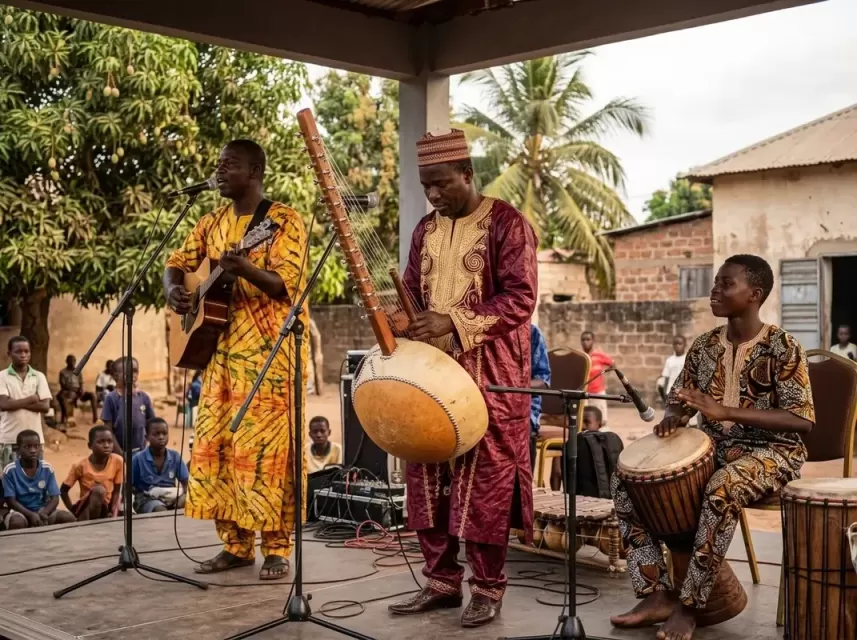
Music and dance are closely connected with Gambian culture. They play a role at celebrations, family occasions, ceremonies and other gatherings.
- Kora: A 21-string instrument traditionally played by Mandinka griots, associated with music, storytelling and oral history.
- Djembe: A hand drum known for its rhythmic sounds, used at music and dance events.
- Sabar: A type of drum strongly associated with Wolof musical traditions.
- Balafon: A melodic percussion instrument with wooden keys.
Drumming, singing and dancing can come together at weddings, naming ceremonies and other festive occasions. Music brings people together and helps pass traditions to future generations.
Some masquerade traditions, including Kankurang and Kumpo, have particular cultural significance. Not every aspect is intended for outsiders. Discuss these traditions respectfully and never photograph or record them without permission.
8. Festivals, weddings and naming ceremonies
Throughout the year, families and communities come together on various occasions. Religious festivals and family ceremonies can play an important role.
- Koriteh (Eid al-Fitr): The celebration marking the end of Ramadan.
- Tobaski (Eid al-Adha): The Festival of Sacrifice.
Weddings and naming ceremonies are also important family occasions. A naming ceremony is sometimes referred to as an Outdo.
Gambian weddings
There is no single way in which people marry in The Gambia. Traditional Islamic marriages are common, but the details can vary. Some ceremonies are relatively simple and religious in nature, while others are celebrated extensively with relatives and guests.
The involvement of relatives and the presence of the bride and groom may vary depending on the circumstances. Some couples combine different forms of marriage or ceremony. Background, religion, family customs and personal preferences all play a role.
Respect at ceremonies
If you have the opportunity to attend a wedding or another family occasion, consider it a special invitation. Always ask whether you are welcome and whether photography is permitted.
Funerals and mourning ceremonies are emotional occasions. Never photograph or film them without explicit permission.
Some aspects of traditional initiation ceremonies, including parts of the Kankurang tradition, are reserved for the community involved. Not everything needs to be visible or accessible to visitors.
9. Experiencing Gambian culture with Franco Inn
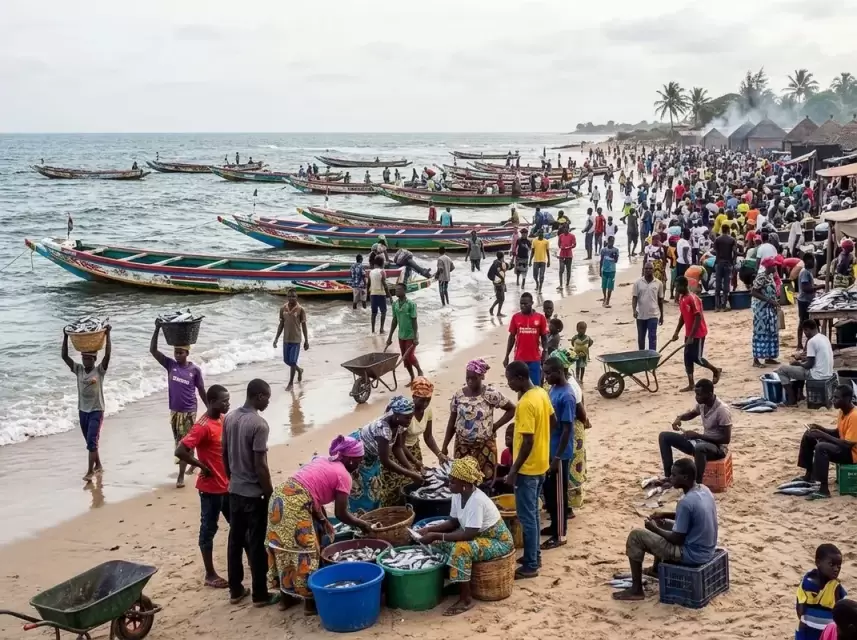
You cannot get to know a culture simply by reading about it. Encounters, conversations, music, food and discovering everyday life can make a journey particularly meaningful.
At Franco Inn Guesthouse, we want our guests to experience more than a holiday in The Gambia. We believe it is important for visitors to get to know the country, its people, culture and everyday life.
- Traditional African evenings: Live djembe music, traditional dancing and a campfire.
- Discovering local dishes: Getting to know Gambian flavours and the role of sharing meals.
- Exploring Tanji: The fishing village, harbour and local fish market offer an insight into coastal life. Discover things to do in Tanji.
- Meeting local communities: Visiting a village can help you learn about everyday life and local customs.
- Discovering the interior: Away from the coast, you can encounter different landscapes and ways of life.
- Nature and birdwatching: Discover more of The Gambia’s natural surroundings and birdlife with local guides.
- Learning about local projects and crafts: Where possible, these encounters offer an insight into the creativity and involvement of local communities.
Not every activity is available at all times. Feel free to ask Franco Inn about the options during your stay. Explore our workshops and excursions.
10. Travel with an open mind
Perhaps the most important thing to remember is that The Gambia is more than the image you may have of it before arriving. It is a country full of life, colour, energy and unexpected encounters.
Daily life sometimes follows a different rhythm from the one you are used to. Someone may drop by, a conversation may begin, relatives may meet or music may be heard nearby. No two days need to be the same.
To get to know The Gambia better, try not to plan every moment in advance. Take your time, stay curious and be open to spontaneous encounters. Connect with people, ask questions when appropriate and respect the privacy of certain traditions.
You cannot discover Gambian culture in a single day. Meeting people and listening attentively to their stories can help you gain a better understanding of the country.
Final thoughts
A trip to The Gambia can be much more than a seaside holiday. Its diverse communities, strong family ties, hospitality, music, dance and cuisine make the country special.
At Franco Inn, we hope guests not only discover beautiful places but also connect with local people and take away a greater understanding of everyday Gambian life.
Come with an open mind, make room for unexpected encounters and discover The Gambia in your own way. Often, these are the moments that stay with you the longest.
