
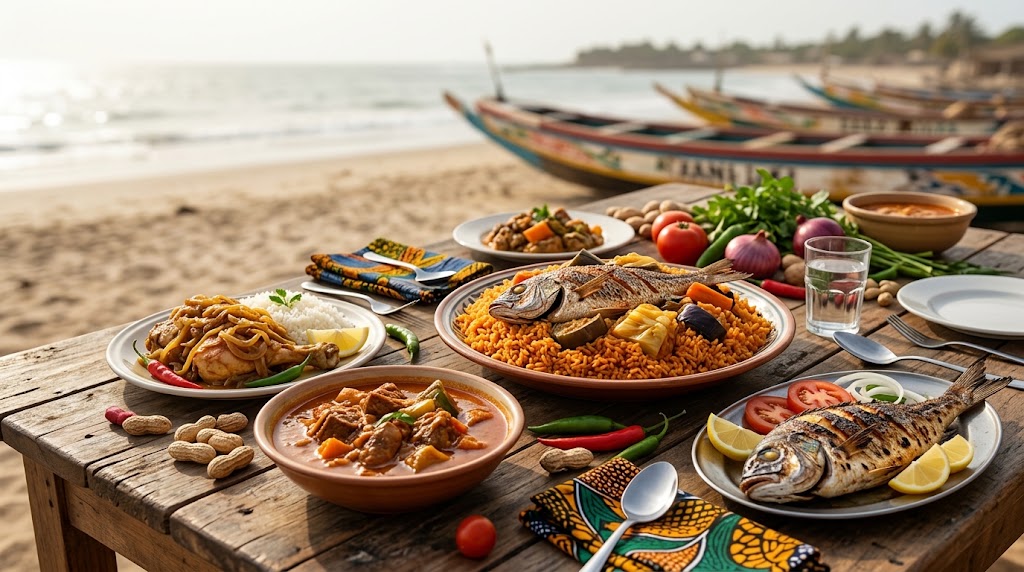
1. Domoda: a rich peanut stew
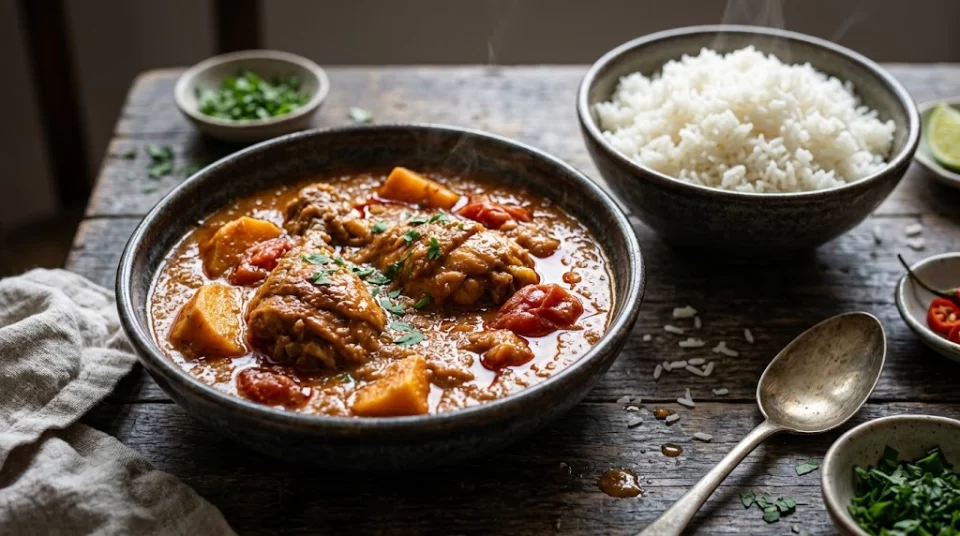
Domoda is a well-known Gambian stew made with ground peanuts or peanut paste. Depending on the recipe, it may include tomatoes, vegetables, meat or fish. The sauce is rich and savoury and is usually served with rice. Recipes vary between cooks and households.
Food tip: Ask exactly what is in the sauce. If you have a peanut allergy, ask about possible cross-contamination too, and do not eat the dish if you are unsure.
2. Benachin: flavourful one-pot rice
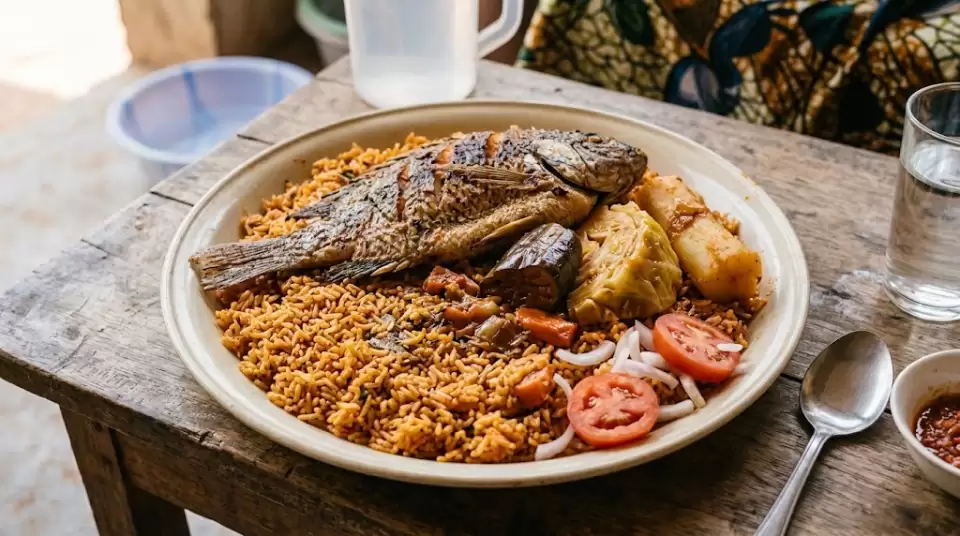
Benachin means roughly “one pot” in Wolof. Rice is cooked with a seasoned tomato base and ingredients such as vegetables, fish or meat, allowing the grains to absorb the flavour of the sauce. Ingredients and colours vary by recipe. Benachin is often compared with other West African rice dishes, but local preparations have their own character.
Food tip: If you have dietary preferences, ask whether the benachin contains fish, chicken, other meat or vegetables only.
3. Yassa: onions, lemon and herbs
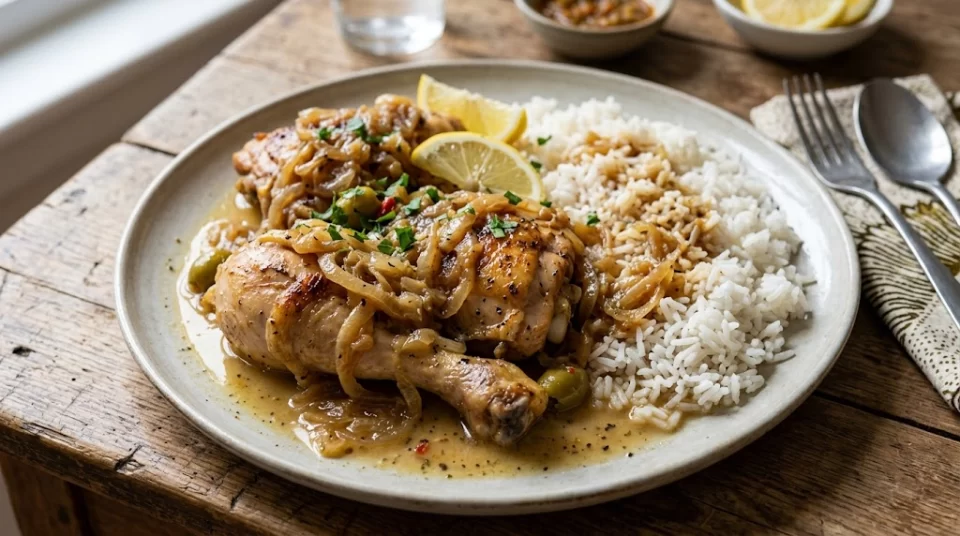
Yassa is often made with chicken or fish marinated with lemon, onions and herbs, then fried, grilled or simmered. The onions create a savoury sauce with a fresh citrus note. The exact preparation varies from cook to cook.
Food tip: Ask how spicy the dish is. If you prefer mild food, check whether the hot sauce can be served separately.
4. Fresh grilled fish on the coast
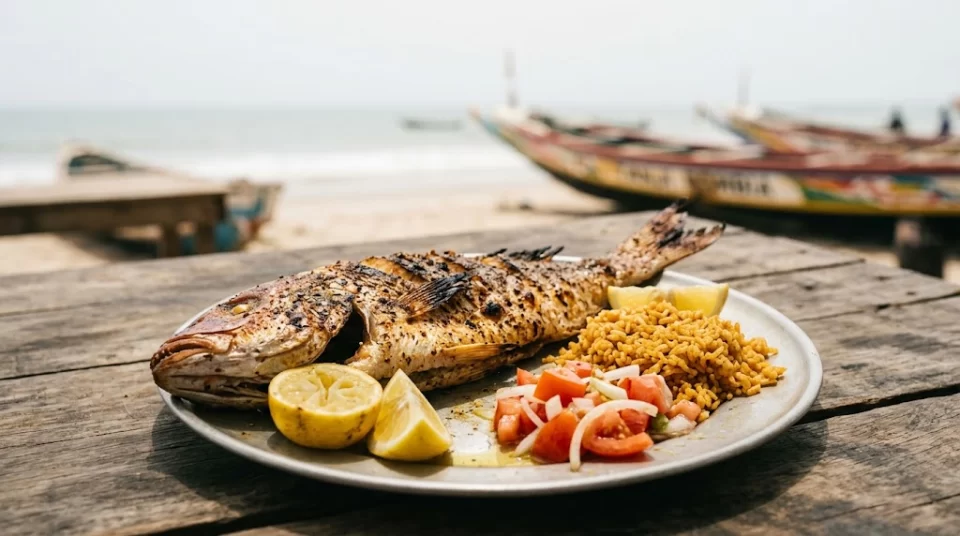
Fish plays an important role in Gambian cuisine, especially in coastal communities. In Tanji, you can observe the activity around fishing and learn more about the journey from catch to market and kitchen. Fish may be grilled or fried and is often served with rice, vegetables or sauce. What is available depends on the catch and the conditions that day.
Food tip: Ask which fish is available that day, whether it contains bones, and what is included with the meal. Remember that a fishing beach is a workplace; follow local guidance and ask permission before photographing people.
5. Afra: seasoned grilled meat
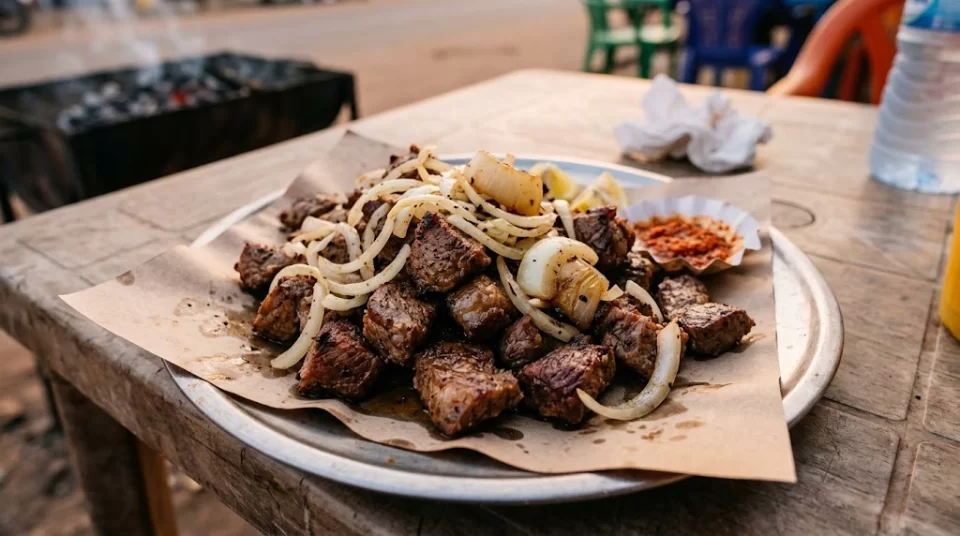
Afra is a snack found in parts of West Africa, including The Gambia. It usually consists of small pieces of seasoned grilled meat, sometimes served with onions or a spicy sauce. Availability and preparation vary by location. Choose a stall where the meat is freshly prepared and thoroughly cooked.
6. Plasas: leafy greens in a savoury sauce
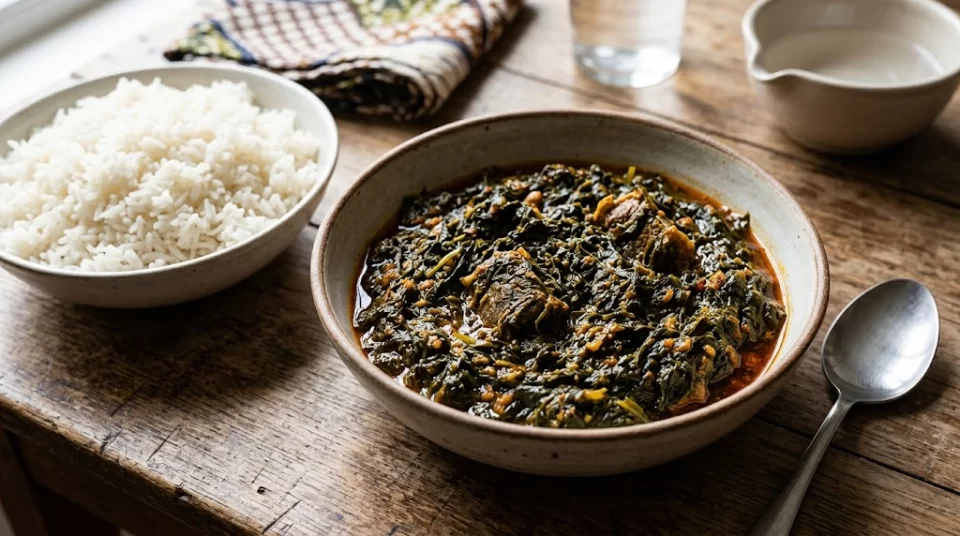
Plasas refers to leafy-green dishes whose exact ingredients vary by recipe. The sauce may include vegetables, oil and seasoning, and sometimes fish or meat. It is often eaten with rice. Ask which greens and other ingredients are used, as the name alone may not tell you exactly what is in the pot.
7. Local Snacks, Fruit and Drinks
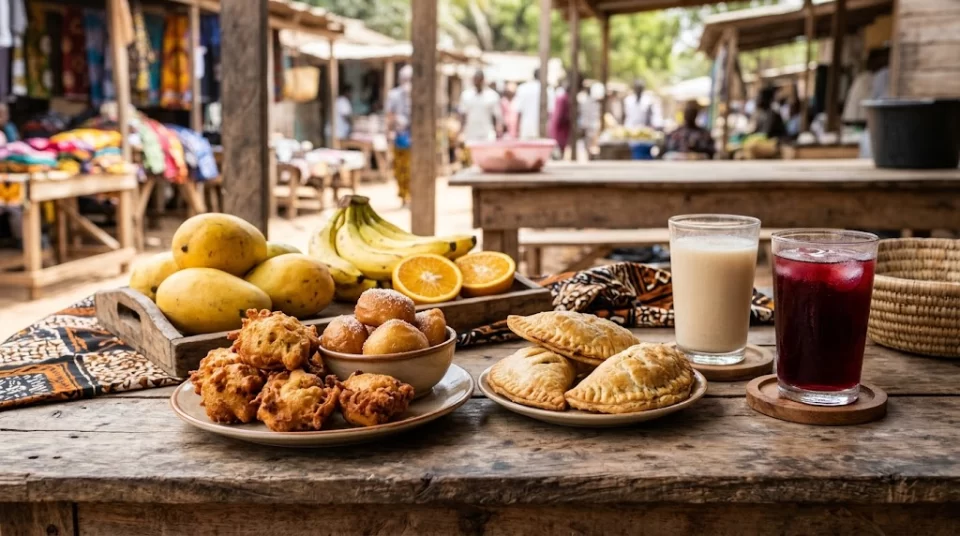
Besides main dishes, you can find snacks at markets and street food stalls, such as **akara** (deep-fried bean fritters). **Pancakes**, a sweet, fried dough snack, are also known locally as *fry fry*. **Meat pies and fish pies** are savoury, golden-brown pastries filled with seasoned minced meat or fish. Their shape and texture are similar to empanadas or small savoury pastries.
Depending on the season, you can also enjoy fresh fruit and local drinks, such as **bissap**, made from hibiscus flowers and also known as *Wonjo*. **Baobab juice**, made from the fruit of the baobab tree, is also known as *Bouye*. Recipes, names and availability may vary from one vendor to another.
Choose fruit that you can peel yourself or that has been hygienically prepared. Use safe drinking water and be cautious with ice if you are unsure whether it was made with safe water.
Where can you try Gambian food?
- Local eateries: Ask which traditional dishes are available that day.
- Markets and food stalls: Look for good hygiene, freshly prepared food and meals served thoroughly hot.
- Coastal towns such as Tanji: Ask about the catch of the day and how it is prepared.
- Your accommodation: Ask the staff for nearby recommendations that suit your taste and budget.
Prices, opening hours and menus can change. Ask for current information locally and confirm the price and what is included before ordering.
Practical tips for eating safely and comfortably
- Allergies: Ask about ingredients and possible cross-contamination, especially with peanuts, fish and sauces.
- Food temperature: Where possible, choose food that is freshly prepared and served thoroughly hot.
- Vegetarian food: Ask whether stock, fish or meat is used in rice dishes and sauces.
- Spice level: Say if you prefer mild food and ask whether sauces can be served separately.
- Local customs: Observe how others eat, follow your host’s lead and ask what is customary if you are unsure.
- Taking photos: Ask people for permission before photographing them or their work.
Discover the food culture around Tanji
Tanji is known for its fishing community and the activity along the coast. A visit can offer a glimpse into everyday life around the fishing industry. You could combine the outing with a meal nearby and ask locally which fish or dish is worth trying that day. Activity on the beach depends on the weather, time of day and the fishers’ work; respect the workplace and follow local guidance.
Make food part of your trip
You do not have to try everything to appreciate Gambian cuisine. Start with a dish that appeals to you, ask about its ingredients and use local recommendations to discover new flavours. Domoda, benachin, yassa and fresh fish each offer a different introduction to the country’s food culture.
Staying at Franco Inn? Ask for tips on local dishes and places to eat around Tanji.
Visit Franco Inn to discover more and plan your stay in The Gambia.
Frequently asked questions
What is a traditional dish from The Gambia?
Domoda and benachin are well-known favourites, and yassa is another dish many visitors enjoy trying. Recipes vary, so the same dish may not taste exactly the same everywhere.
Is Gambian food spicy?
Some dishes and sauces are spicy, but not all. Ask how a dish is prepared and whether hot sauce can be served separately.
Can you eat vegetarian food in The Gambia?
Vegetarian options may be available, but ask whether meat stock, fish or other animal ingredients are used in the sauce or rice.
Where can I try fresh fish?
In coastal towns and fishing communities, including Tanji, you can ask about the catch of the day. Availability varies daily.
How do I choose a food stall?
Look for good hygiene, choose freshly prepared food served thoroughly hot where possible, and ask local residents or your accommodation for recommendations.
